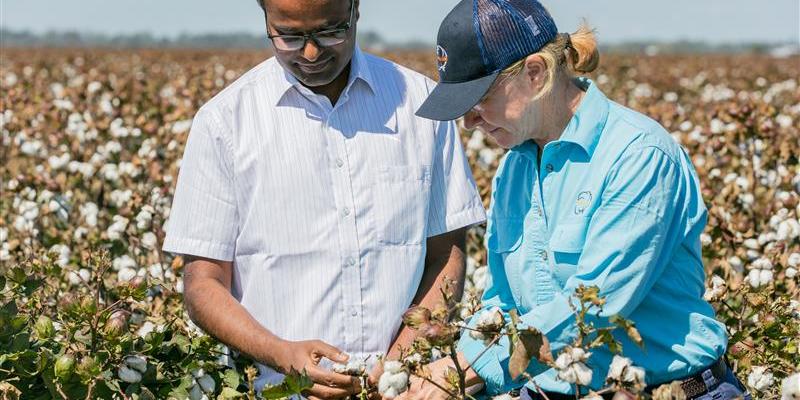
Everyone has a responsibility to play when it comes to biosecurity.
Everyone has a responsibility to play when it comes to biosecurity.
Farm biosecurity is a set of practices designed to protect farms and our industry from the entry, spread and establishment of pests, weeds and diseases. Both exotic and endemic pests and diseases are capable of reducing yields, affecting the environment and changing the way we manage our crops and farms. For growers and crop managers, it's important to protect your asset – your farm – with a farm biosecurity plan, which integrates on-farm biosecurity practices that prevent or reduce the risk of pest, weeds and diseases entering or spreading.
Australia has a world-class biosecurity system, however with increased international trade and people movements, there will always be a risk of new plant pests or diseases entering the country. There is also the additional possibility that pests can also be spread to Australia through natural means such as wind and water currents.
Everyone has a responsibility when it comes to biosecurity. Previous changes in QLD and in NSW biosecurity legislation make it the obligation of everyone – growers, contractors, visitors - to take reasonable and practical steps to prevent or minimise biosecurity much more explicit.
Biosecurity is a shared responsibility between everyone in the community, including growers, consultants, contractors, industry members and visitors. Each person needs to play their part to reduce the likelihood of spreading pests, weeds and diseases. You do not need to know about all biosecurity risks, but you should know about biosecurity risks associated with your industry, your business and day-to-day work, and even hobbies, and take reasonable steps to prevent or minimise these risks.
Defending your farm
Growers play a key role in protecting Australia's agricultural industry from pests, weeds, and diseases by implementing on-farm biosecurity measures. Implementing strong biosecurity measures on your farm will help protect your business, region and the industry from the introduction and spread of endemic and exotic pests, weeds, and diseases.
If a new pest or disease becomes established on your farm, it could affect your business through increased costs (for monitoring, changes in production practice, additional chemical use and labour), reduced productivity (in yield and/or quality) or loss of markets. Early detection and immediate reporting increase the chance of effective and efficient eradication.
Your region. Your farm. Your risks. Your plan.
Developing a farm biosecurity management plan can help growers assess the biosecurity risks associated with their farms and businesses and decide on appropriate actions and practices to mitigate and minimise these biosecurity risks. In its essence, a farm biosecurity management plan is a risk assessment. Completing a risk assessment is not about completely removing every risk, it is about trying to minimise the risk by taking reasonable steps and actions.
In an ideal world, farms would be able to complete every action in a farm biosecurity checklist. But in reality, some actions are not always applicable to a farm while others are not always practical. While the actions in a checklist are great recommendations, no single action contributes to a 'right' farm biosecurity management plan. Growers need to make their farm biosecurity management plan work for them, taking into consideration their farm and biosecurity risks and the best actions to mitigate these risks.
A farm biosecurity management plan is available with instructions on how to use the template. For assistance in completing your farm biosecurity management plan, contact the CottonInfo Technical Lead for Biosecurity (details below). You can access an example of a completed biosecurity management plan here.
Stay updated with our latest industry news
Stay updated with our latest publications
Stay updated with our latest events